




How to Automate Lead Routing in HubSpot for Faster, More Accurate Assignment
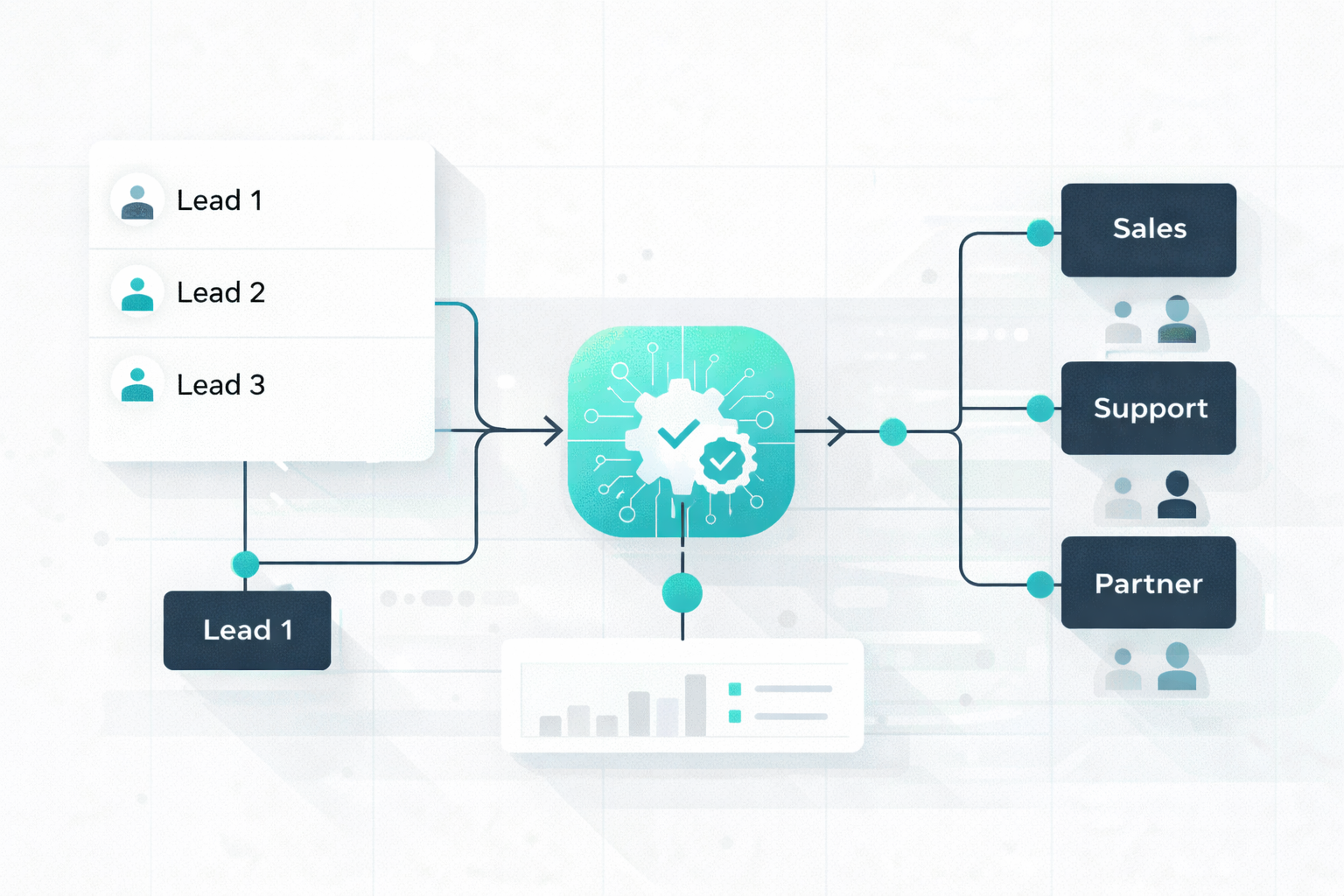
Speed and precision in handling new leads are the primary factors that distinguish a won deal from a lost opportunity. However, for many...
A HubSpot Elite Solutions Partner built to help organizations unify strategy, systems, and execution. We design HubSpot systems that scale.
See how we've solved complex HubSpot challenges across migrations, integrations, CMS, automation, and optimization.
Join a team building smarter HubSpot systems. We value strategic thinkers who move proactively, care about quality, and want to do meaningful work.
Free assessments, knowledge, and expert content for your HubSpot.
11 min read
Campaign Creators
:
03/09/26
Many organizations invest heavily in lead nurturing, they create content libraries, building email workflows, and launching automation campaigns designed to move prospects toward a purchase decision. Yet despite this effort, nurturing programs often produce inconsistent results. Engagement may occur, but pipeline growth and revenue impact remain difficult to predict.
The issue rarely lies in the campaigns themselves. In most cases, the real problem is structural. When lifecycle stages, qualification criteria, and team handoffs are not clearly defined, nurture programs operate without a coherent framework. Contacts move through disconnected campaigns instead of progressing through a deliberate system designed to guide them toward becoming customers.
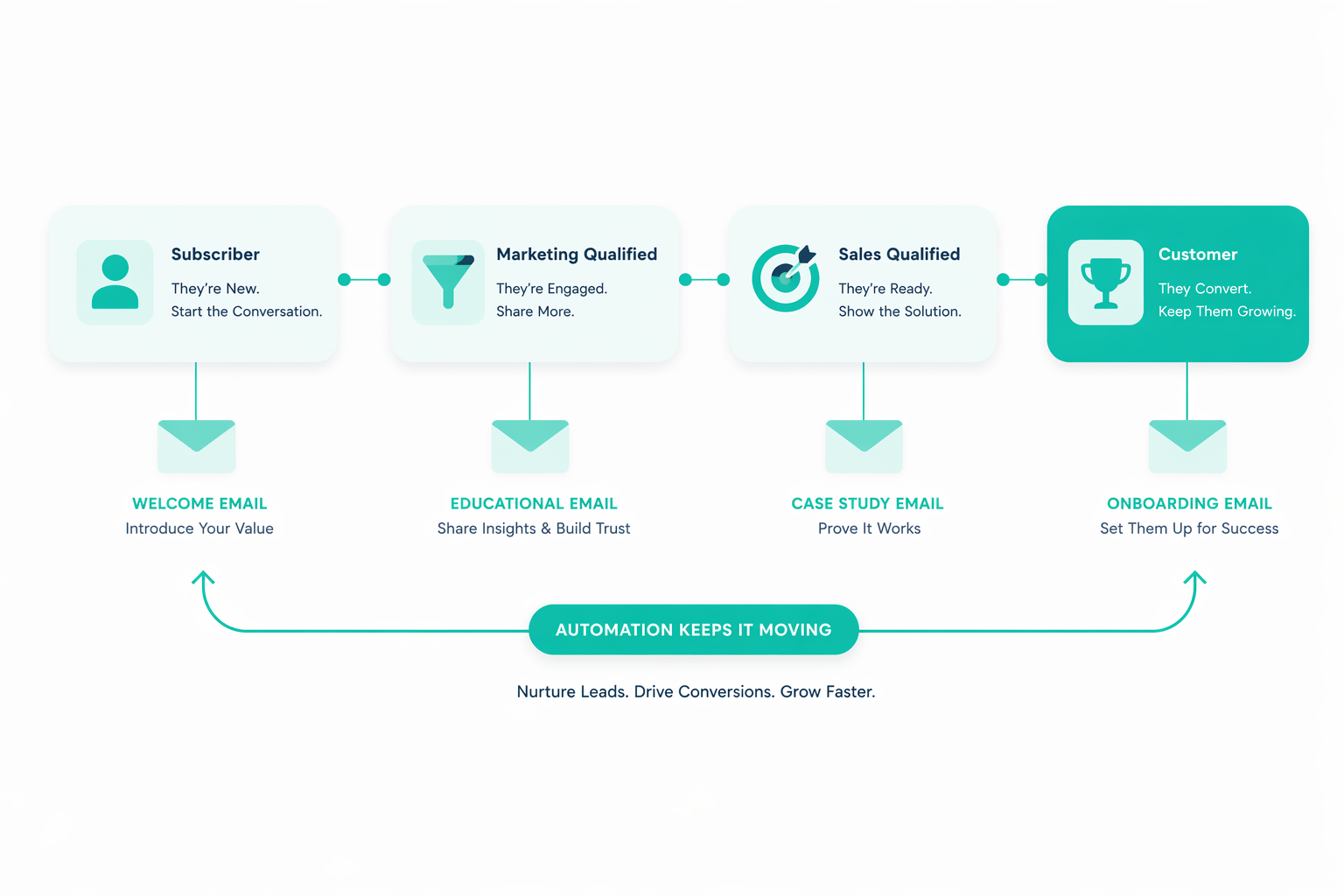
Effective lead nurturing does not begin with content calendars or automation tools. It begins with lifecycle architecture—the operational structure that defines how contacts move through your revenue funnel and how marketing, sales, and service collaborate to accelerate that progression.
.png?width=1200&height=800&name=CC%20Blog%20Images%20(4).png)
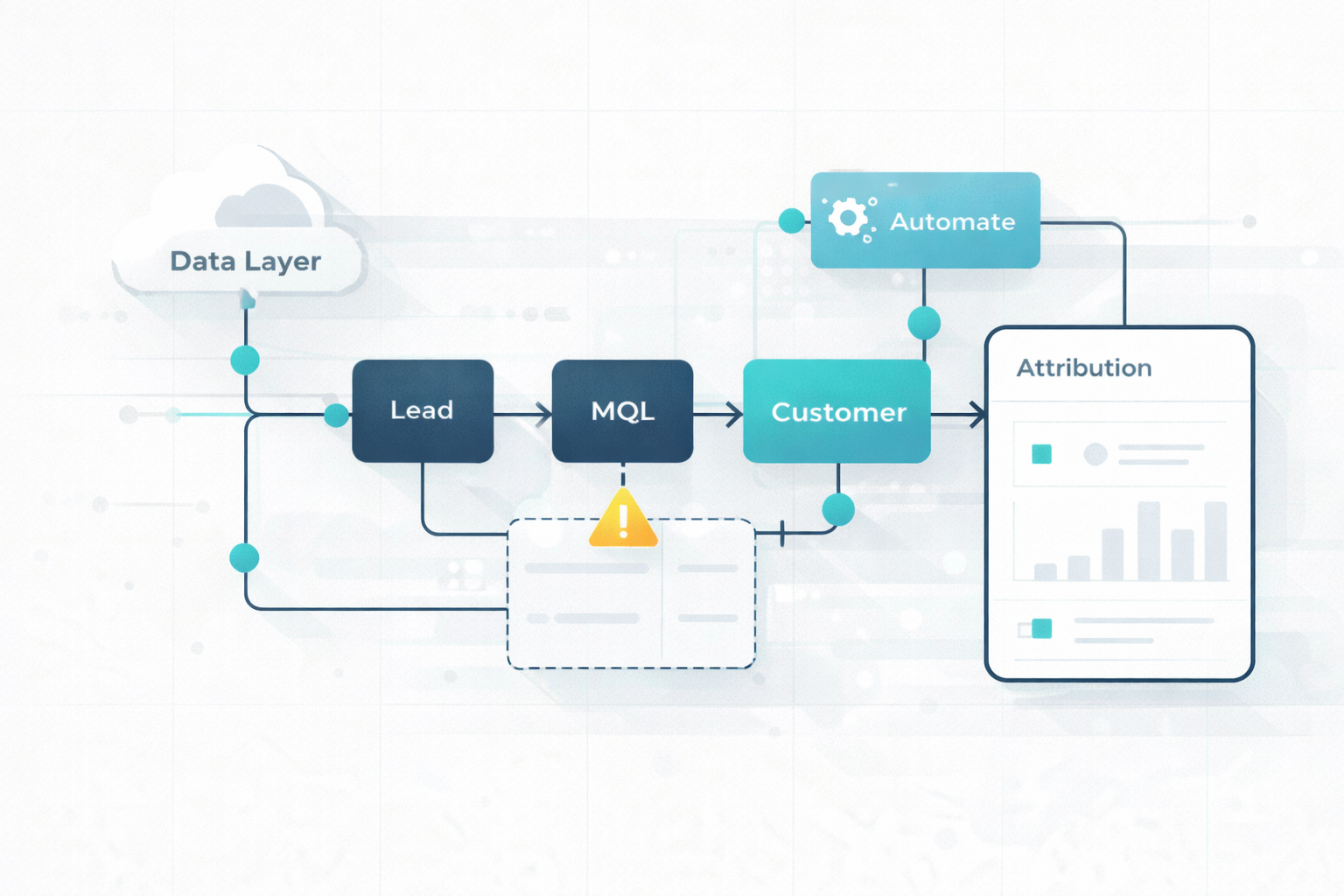
Effective lifecycle automation begins with architectural clarity. It requires cross-functional alignment on stage definitions, entry and exit criteria, qualification thresholds, and handoff protocols. Marketing, sales, and service must operate from a unified taxonomy where contacts move through stages based on behavior and engagement rather than time elapsed or campaign enrollment alone. Without this structured framework, automation amplifies inconsistency instead of creating leverage.
A unified lifecycle framework is not a marketing initiative. It is a cross-functional revenue architecture that ensures every department operates from consistent definitions, shared data models, and aligned progression logic. This framework defines how contacts enter your system, what qualifies them to advance through stages, and how marketing, sales, and service collaborate to accelerate movement toward revenue outcomes.
This unified framework eliminates the silos that cause nurturing to fail. When lifecycle architecture is embedded across all hubs, automation scales intelligently. Contacts receive contextually relevant messaging based on their actual stage. Sales engages prospects at the optimal moment. Service interactions inform retention strategies. Revenue attribution becomes reliable because every touchpoint is connected to measurable lifecycle progression. The result is not incremental improvement—it is systemic transformation.
Revenue-focused automation workflows differ fundamentally from campaign-based execution. Traditional campaigns prioritize message delivery and engagement metrics, while revenue-focused workflows prioritize lifecycle progression and conversion velocity. Each automation sequence is designed with a single objective: move contacts toward a defined revenue outcome with measurable efficiency.
.png?width=1200&height=800&name=CC%20Blog%20Images%20(5).png)
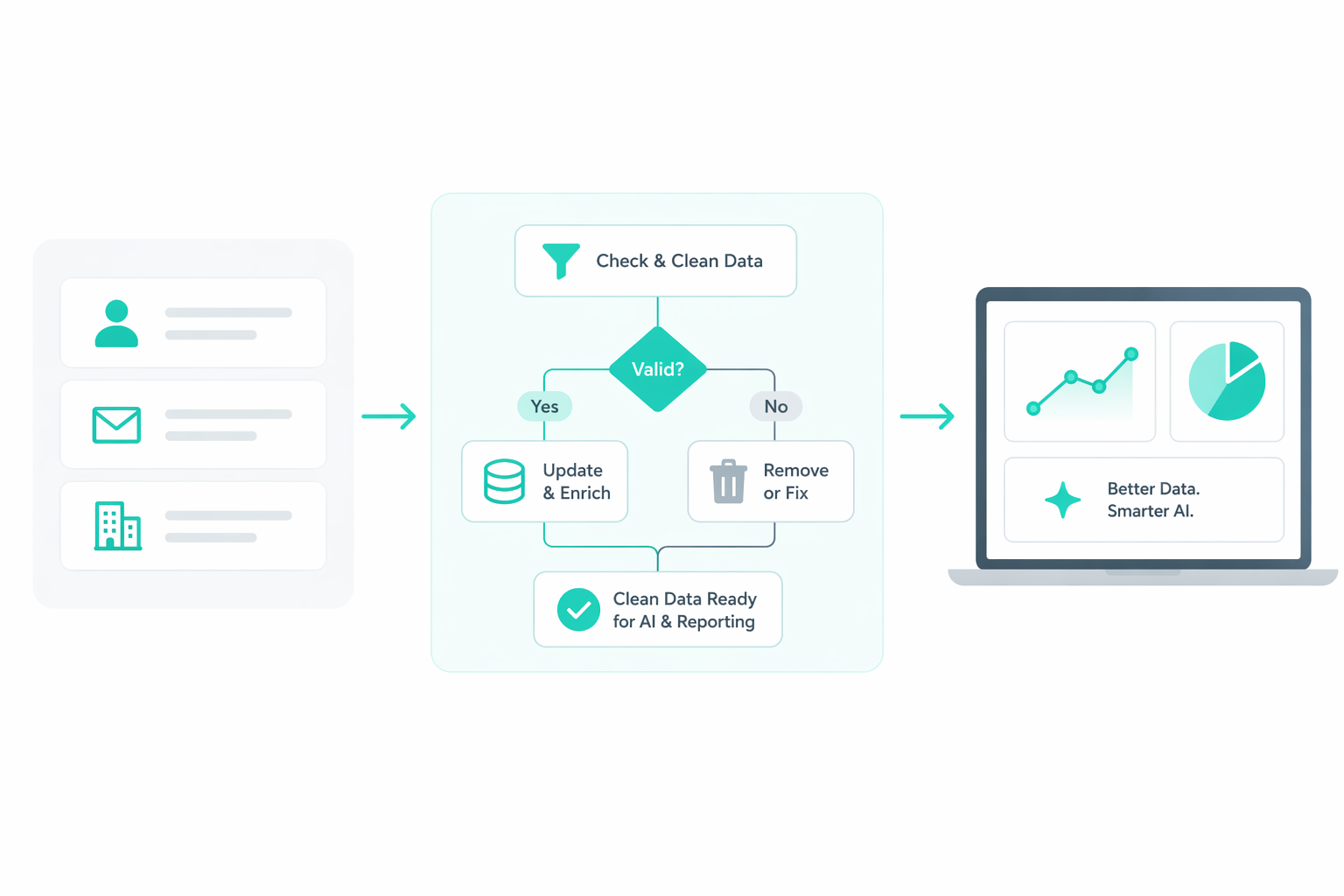
The design process begins by mapping the lifecycle transitions you want to drive. For every stage in your lifecycle framework, identify the behaviors, engagement patterns, and qualification signals that indicate readiness to advance.
Using Workflows with Lifecycle Stage Enrollment, HubSpot can automatically move contacts between stages when specific criteria are met. For example, a contact progressing from Lead to MQL might demonstrate intent through repeated content consumption, downloads of high-value assets, pricing page visits, or engagement with bottom-of-funnel content.
Qualification thresholds can be reinforced with Lead Scoring, which assigns weighted values to behavioral signals and demographic attributes. When a contact reaches a defined scoring threshold, workflows can trigger lifecycle progression, notify sales teams, or enroll the contact in more advanced nurture sequences.
Once progression signals are defined, workflows should be designed to systematically accelerate those transitions.
Effective nurture sequences deliver progressively deeper content aligned to each stage of the buyer’s journey:
To ensure contacts receive relevant experiences, workflows should incorporate If/Then Branching Logic. This allows automation to adapt based on engagement signals—for example, delivering demo-focused content to contacts who clicked a product page, or sending reminder messaging to contacts who have not opened prior emails. Instead of rigid, linear campaigns, contacts progress through dynamic paths tailored to their behavior.
Revenue-focused automation should also support the handoff between marketing, sales, and customer success.
When a contact reaches SQL status, workflows can trigger Internal Notifications & Tasks to alert the assigned sales representative, populate CRM records with behavioral insights, and create follow-up tasks that ensure timely outreach.
After a deal closes, automation should transition customers into onboarding and activation programs. Using Service Objects & Onboarding Workflows, organizations can initiate onboarding sequences triggered by Closed Won deals, guide customers through early adoption milestones, and monitor activation progress.
Retention workflows can then track engagement decline, usage signals, or renewal risk indicators—triggering proactive outreach before churn occurs.
Every workflow should be instrumented for performance measurement. Clear success metrics should be defined for each sequence, including stage conversion rates, time-in-stage reduction, pipeline influence, and revenue attribution.
HubSpot’s Workflow Analytics & Custom Reports allow teams to monitor enrollment rates, completion performance, and goal attainment across automation programs. For deeper measurement, the Custom Report Builder can be used to analyze lifecycle progression, revenue attribution, and operational efficiency metrics such as time spent in each stage.
When workflows underperform, teams should diagnose whether the issue lies in targeting criteria, message relevance, timing, or offer strength. Optimization should be continuous rather than episodic.
Revenue-focused automation is not a set of campaigns—it is a system that improves over time through structured iteration and data-informed refinement.
Lead scoring replaces subjective “good lead” opinions with objective, numeric prioritization so sales focuses on the right contacts.
Actionable tips:
A strong model scores both who the contact is (fit) and what they do (behavior).
Actionable tips:
Scores should directly control progression from Lead → MQL → SQL.
Actionable tips:
Segmentation amplifies scoring by ensuring each lead gets contextually relevant messaging.
Actionable tips:
Advanced segmentation uses AI and patterns in your own data to uncover hidden opportunities.
Actionable tips:
The goal is faster, higher-quality movement from first touch to closed-won.
Actionable tips:
Lifecycle automation that cannot be measured cannot be optimized. Without clear performance visibility, organizations operate on assumption rather than evidence. Marketing invests in campaigns without understanding which workflows drive pipeline. Sales lacks confidence in lead quality because qualification criteria remain unvalidated. Leadership cannot forecast revenue accurately because lifecycle progression is opaque. Measurement transforms automation from activity into accountability.
.png?width=1200&height=800&name=CC%20Blog%20Images%20(6).png)
Lifecycle automation only improves when it’s measured with discipline instead of assumed to be “working.”
Stage-level metrics reveal where your funnel is healthy and where it’s stalling.
Attribution links workflows and campaigns to closed-won revenue instead of vanity metrics.
Workflow-level analysis shows where automation is breaking down.
Influence metrics demonstrate how lifecycle automation impacts deals—not just leads.
Optimization is a recurring practice, not a one-off project.
Lead nurturing rarely fails because of a lack of content or campaigns—it fails when the lifecycle architecture behind it is missing. Without clearly defined stages, qualification criteria, and handoff protocols, even sophisticated automation becomes fragmented and ineffective. Organizations that generate predictable pipeline treat nurturing as a revenue system, aligning lifecycle architecture, automation, and data so contacts move through the funnel with clarity, relevance, and measurable impact on revenue.
Building this kind of lifecycle-driven system requires more than marketing campaigns—it requires the right strategy, technology architecture, and operational alignment.
At Campaign Creators, we help organizations design and implement lifecycle frameworks that connect marketing automation, CRM data, and revenue operations into a unified system. From HubSpot onboarding and lifecycle architecture design to lead generation strategy, conversion optimization, and automated nurture programs, we help teams transform disconnected campaigns into scalable revenue engines.
If your lead nurturing programs feel busy but aren’t producing predictable pipeline, it may be time to rethink the architecture behind them.
Speed and precision in handling new leads are the primary factors that distinguish a won deal from a lost opportunity. However, for many...
Automation has transformed nearly every aspect of modern business, reshaping how companies operate, communicate, and grow. Yet, with lead nurturing,...
Most teams do not struggle with automation tools because workflows, sequences, and triggers are already running inside HubSpot.